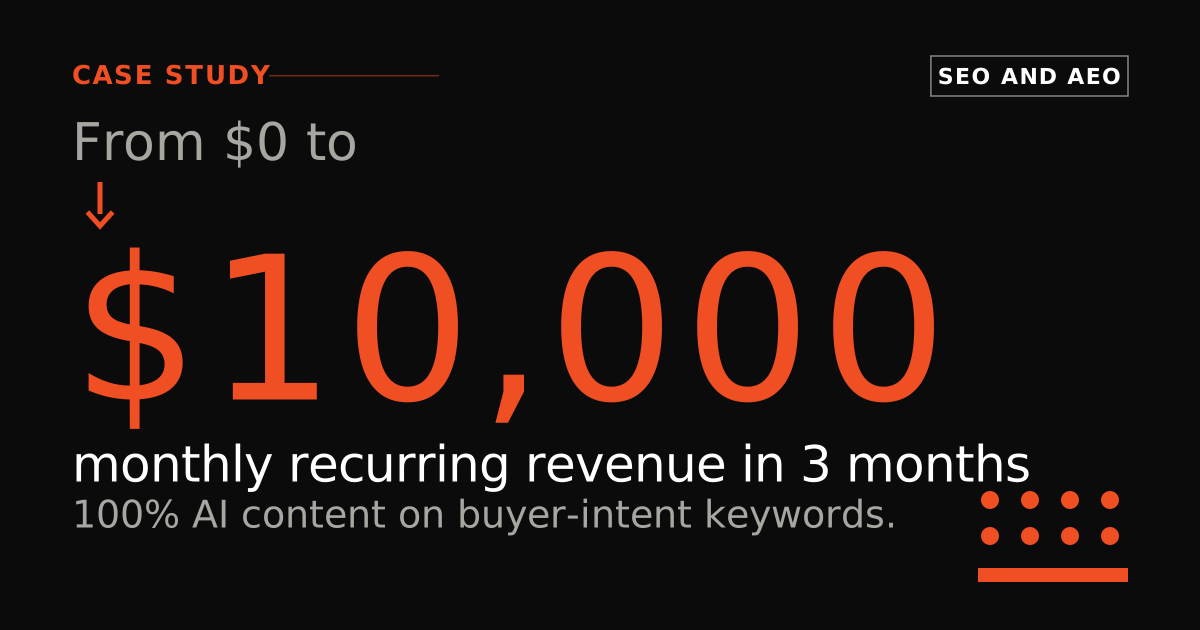
We grew one of Luca's sites from $0 to $10,000 in monthly recurring revenue (MRR) in 3 months, starting in August 2023. Luca owns HSU Marketing agency. The site ran on 100% AI content aimed at buyer-intent keywords, the searches where people are ready to buy.
- Client
- Luca, owner of HSU Marketing agency (his site)
- Result
- $0 to $10,000 monthly recurring revenue (MRR) in 3 months
- Started
- August 2023
- Content
- 100% AI content, on buyer-intent keywords
- Languages
- More than one, set up with hreflang
- Services
- SEO and AEO
$10,000
monthly recurring revenue
From $0 in 3 months. Started August 2023.
100%
AI content
On buyer-intent keywords.
How it started
In August 2023, we began working on Luca's site. The goal was clear: lift its online presence and revenue with SEO. The challenge was to get real results fast, in a field where patience is often considered key.
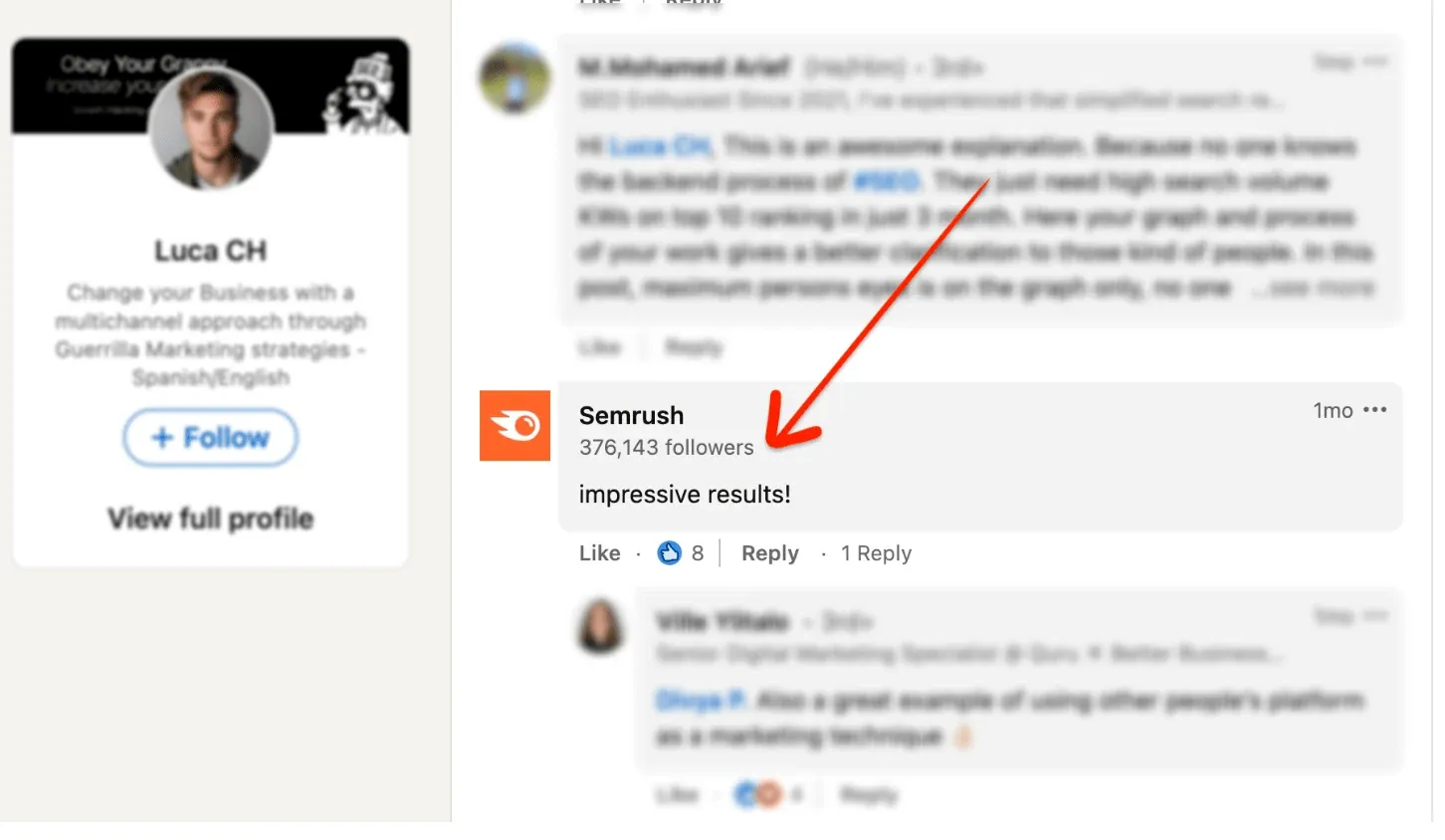
Luca shared the results on his LinkedIn page, and Semrush commented "impressive results!" on the post.
The results
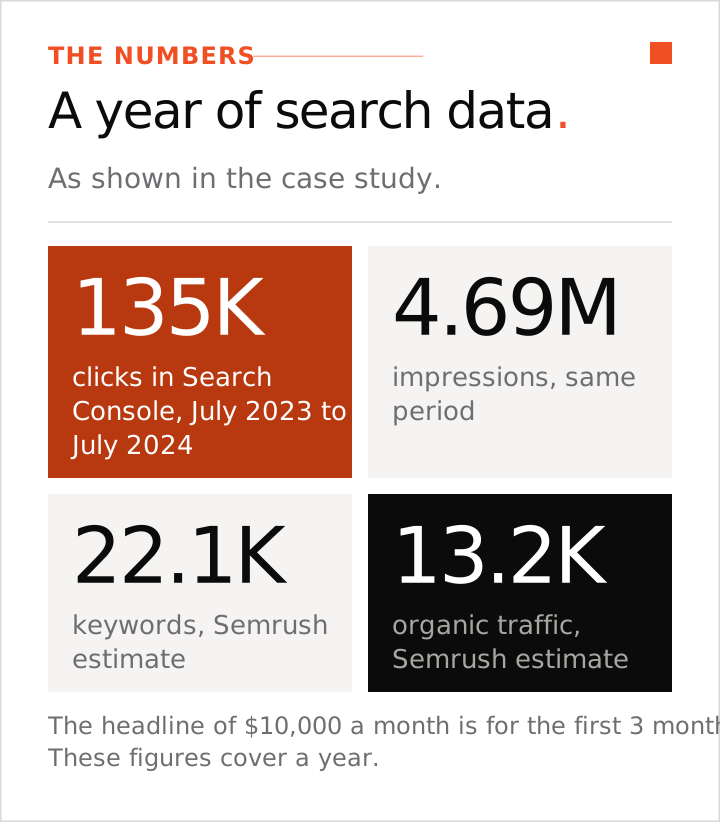
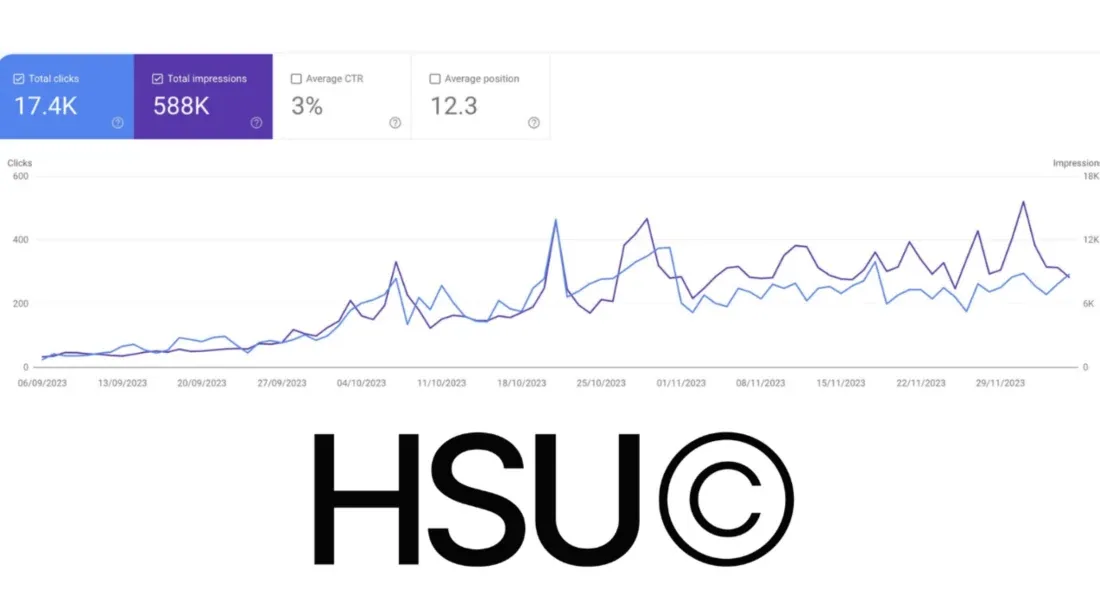
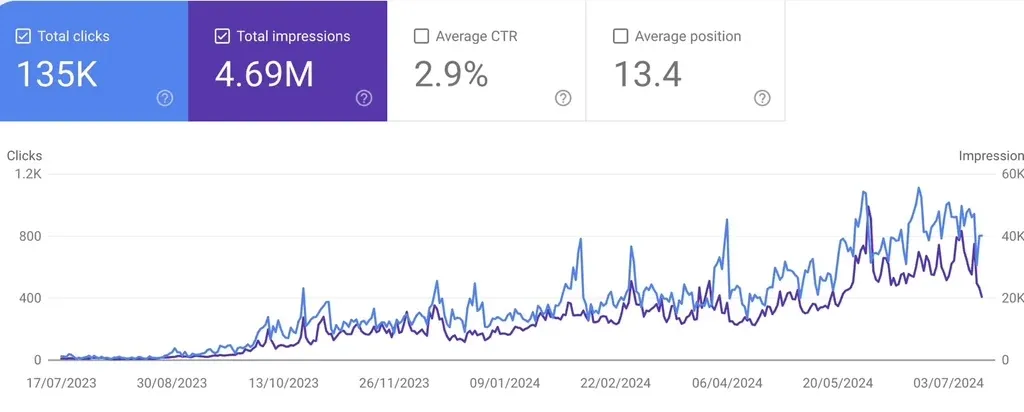
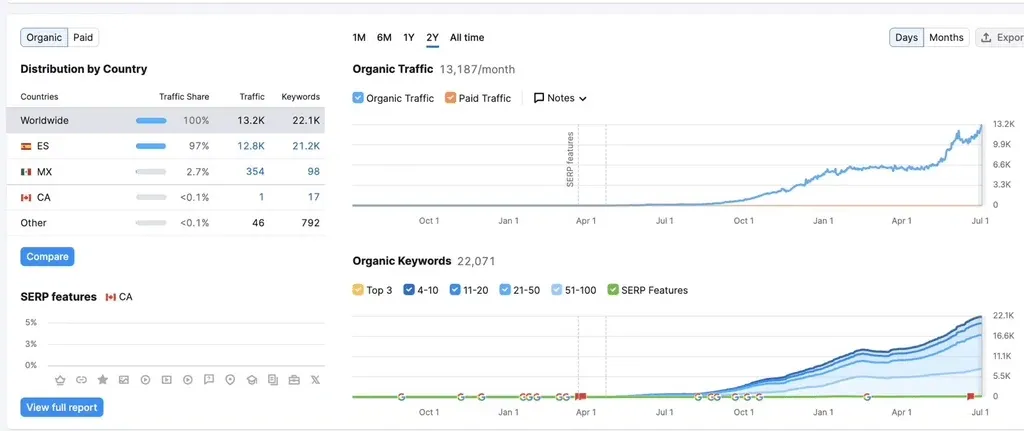
Search traffic grew steadily on 100% AI content. Semrush data shows the quick rise in organic traffic and, with it, in organic keyword rankings.
Publishing content that drives sales
Many SEO plans fail to bring in money because they chase keywords that do not convert, the ones typed by people who are not ready to buy. Most of the keywords we targeted with our AI content tool were buyer-intent, so the people searching were already leaning toward buying.
The content spoke to customer pain points and questions, and the pages were built for conversions, not only traffic.
What we did
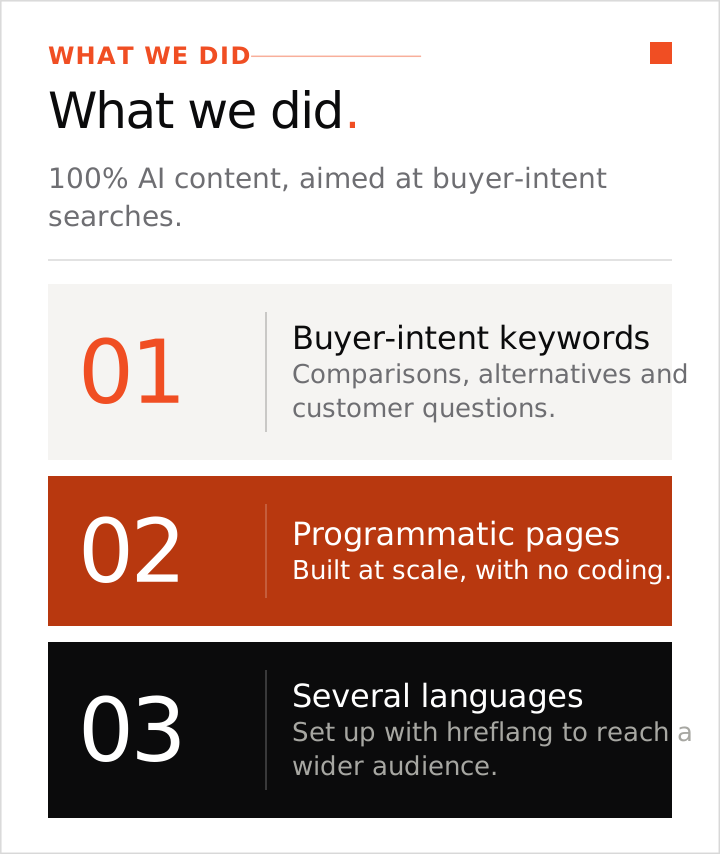
- Programmatic SEO, which needs no coding, to scale the work efficiently.
- Deep keyword research and content categorisation, so each page matched a specific search intent.
- Title and meta optimisation: main keywords in titles and landing pages lined up with user intent.
- Hreflang, so the site could serve several languages and reach a wider audience.
- Comparison pages, to lift the pages that produce real conversions.
- A focus on high-converting keywords instead of high-volume ones: comparisons and alternatives, customer pain points combined with keywords, and questions about customer problems.
- Hotjar, to see how visitors used the site and guide them toward conversion actions.
How the work ran fast
The tool's automation let us test several things and publish at a very fast pace. That speed is part of why the result came so quickly. The tool handled:
- Keyword research, fully automated.
- WordPress integration (it also connects to Wix, Blogger, Webflow, Ghost, Zapier and an API).
- Content generation, based on the keyword research.
- Content publishing, a mix of manual and automated publishing through its autoblogging feature.
- Syndication to social media.
What else you need besides AI posts
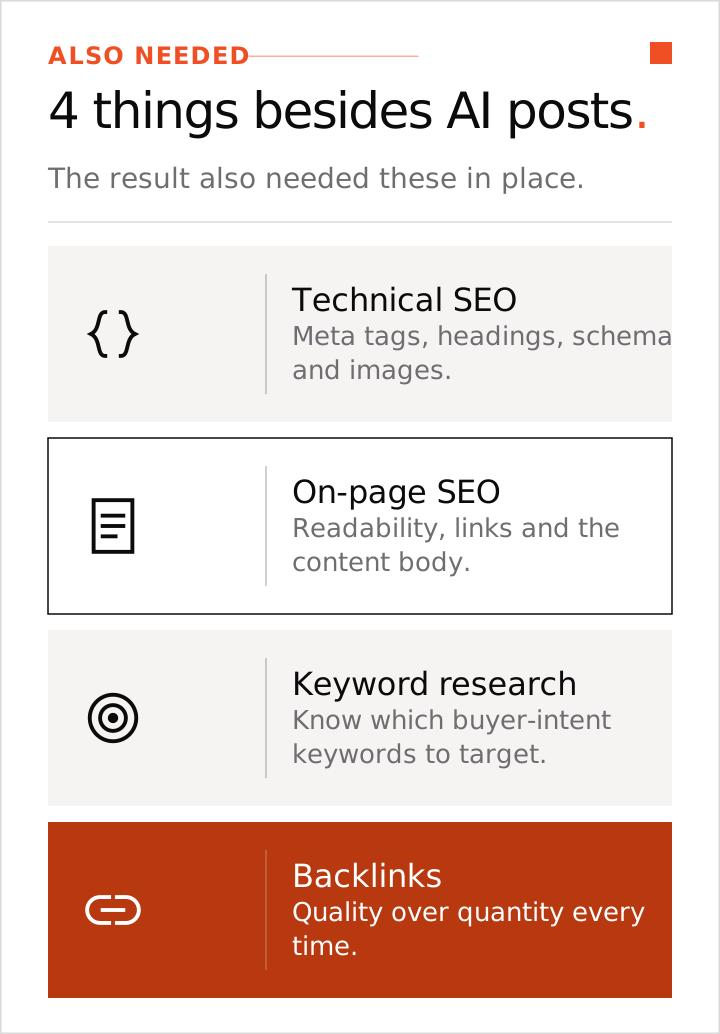
AI blog posts alone are not enough. The result also needed four things in place:
- Technical SEO: meta title and description, headings, schema markup, body content and image optimisation. Our guide: technical SEO checklist.
- On-page SEO: headers, readability, visual content such as images, tables and bullets, internal and external linking, and the content body. Our guide: the on-page SEO checklist.
- Keyword research: knowing exactly which keywords to target, ideally buyer-intent ones. Automating it with AI works once you understand how it works. Our guide: keyword research.
- Off-page SEO and backlinks: quality over quantity every time, copying your competitors' backlinks is a good strategy, and links can be bought (faster) or earned (slower).
The ideas are simple. Doing them well is where the time goes.
What AI content did here
In this case, AI content worked as well as content written by hand, because it answered what searchers wanted. We figured out what Google was rewarding for each keyword, then produced better content for the same keyword that satisfied the search intent. After that it was a matter of repeating the process.
AI helps you iterate faster, and the faster you iterate, the faster you pass the competition. It also saves the hours that go into keyword research, internal and external linking, sourcing images and similar tasks. Our view: yes, use AI, because your competitors will.